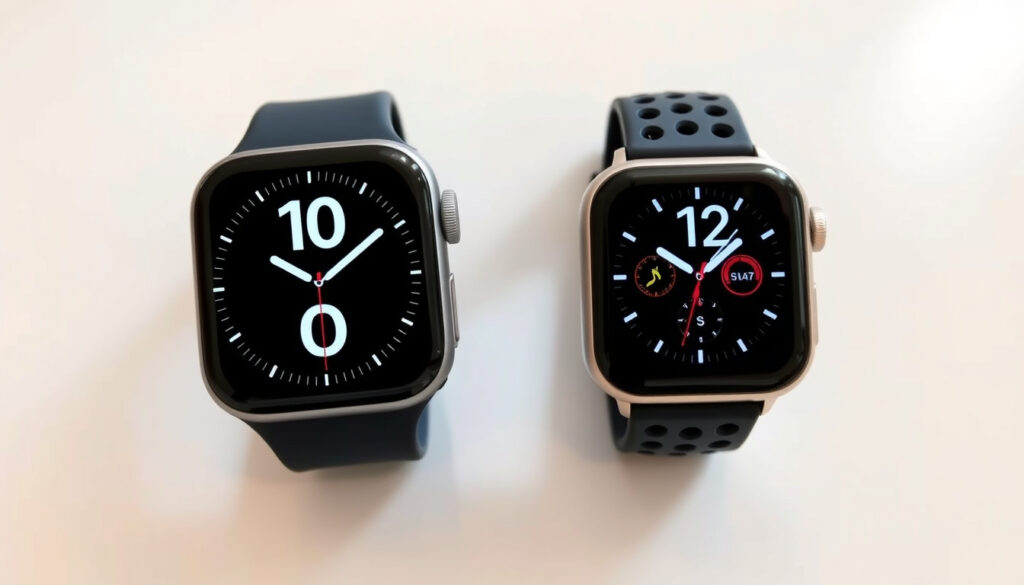
Apple Watch 10 vs SE: Which One Should You Buy
Picking between the Apple Watch Series 10 and the SE often comes down to one question: do you want a do‑everything smartwatch or a capable one that leaves a few bucks in your pocket? The Series 10, announced in September 2024, brings a bigger always‑on display and faster charging, while the SE keeps things simple with a lower price tag.
Display: Series 10: 42mm/46mm Always‑On Retina LTPO OLED; SE: 40mm/44mm Retina LTPO OLED ·
Chip: Series 10: S10 SiP; SE: S8 SiP ·
Charging: Series 10: 0‑80% in 30 min; SE: 0‑80% in 1.5 hours ·
Price: Series 10: from $399; SE: from $249 ·
Health sensors: Series 10: Blood oxygen, ECG, temperature; SE: Fall detection, crash detection, heart rate
Quick snapshot
- Series 10 has an always‑on LTPO3 OLED Retina display (Apple Support)
- SE lacks blood oxygen and ECG sensors (Apple)
- Series 10 fast‑charges to 80% in ~30 minutes (Apple Support)
- Whether an SE 3 will be released soon (Apple Newsroom)
- Long‑term battery degradation differences (Apple Newsroom)
- Regional availability of sleep apnea notifications (Apple Newsroom)
- Whether the $249/$399 starting prices will hold through 2025 (Apple Newsroom)
- Series 10 announced 2024‑09‑09, available 2024‑09‑20
- SE (2nd gen) announced 2022‑09‑07
- Expect a potential SE 3 refresh in 2025 or 2026
- Sleep apnea feature rollout subject to regulatory approval
What is the difference between the Apple Watch 10 and SE?
The takeaway: The Series 10 distances itself through a larger always-on display, faster charging, and medical-grade sensors, while the SE retains the core smartwatch experience at a significantly lower price.
Display and design differences
The Series 10 offers a larger display area with an always‑on LTPO3 OLED panel that reaches up to 2,000 nits brightness, while the SE uses a standard Retina LTPO OLED capped at 1,000 nits and lacks the always‑on feature. The Series 10 is also thinner at 9.7 mm and comes in aluminum or titanium finishes; the SE is available in aluminum only.
Two sizes, one pattern: the Series 10 gives you more screen and more material choices, while the SE sticks to a compact, lightweight build. For users who glance at their wrist without tapping it, the always‑on display is a real time‑saver.
The SE’s smaller, less bright display works fine for notifications and workouts, but anyone who uses watch faces as a glanceable dashboard will miss the always‑on convenience.
Processor and performance
The Series 10 runs on the S10 SiP with 64GB of storage, while the SE uses the S8 SiP with 32GB. The extra storage on the Series 10 matters for offline music and podcast storage. The Series 10 also includes a second‑generation Ultra Wideband chip for better precision finding; the SE lacks this.
The implication: The Series 10 is snappier for app launches and future‑proofed for watchOS updates, but the SE’s S8 chip still handles everyday tasks smoothly for most users.
Health and fitness features
The Series 10 packs ECG, blood oxygen, and temperature sensing — sensors the SE simply does not have. Both models offer fall detection, crash detection, heart rate monitoring, and sleep tracking. The Series 10 also includes sleep apnea notifications, though this feature requires regulatory approval in many regions.
For fitness enthusiasts who want cycle tracking or heart‑rhythm alerts, the Series 10 is clearly the more capable companion. The SE covers basic fitness — steps, runs, swims — without the medical‑grade extras.
Battery and charging
Both watches are rated for up to 18 hours of battery life. The difference lies in charging speed: the Series 10 reaches 80% in about 30 minutes, while the SE reportedly takes about 1.5 hours for the same charge.
Six specifications, one story: the Series 10 is built for speed and depth, the SE for simplicity and price. Putting them side by side shows the full picture.
| Spec | Series 10 | SE (2nd gen) |
|---|---|---|
| Case sizes | 42mm, 46mm | 40mm, 44mm |
| Display | Always‑on LTPO3 OLED, 2000 nits | Retina LTPO OLED, 1000 nits, no always‑on |
| Chip | S10 SiP | S8 SiP |
| Storage | 64GB | 32GB |
| Health sensors | ECG, blood oxygen, temperature | Heart rate, accelerometer, gyroscope |
| Charging (0‑80%) | ~30 min | ~1.5 h |
| Materials | Aluminum, titanium | Aluminum only |
| Ultra Wideband | 2nd gen | None |
| Price (starting) | $399 | $249 |
Why this matters: The $150 gap buys you a bigger, brighter screen, faster charging, and medical‑grade health sensors. If those are must‑haves, the Series 10 justifies its premium. If not, the SE covers the essentials at a much friendlier price.
Should I upgrade to Apple Watch 10 from SE?
The takeaway: SE users prioritizing health sensors and display quality will find the Series 10 upgrade transformative. Budget-focused users comfortable with basic fitness tracking can safely wait for the next SE refresh.
For current SE users: key improvements
If you own an SE (1st or 2nd gen), the Series 10 offers a significantly larger always‑on display, faster charging that cuts wait time by roughly 60%, and health sensors not available on the SE — ECG, blood oxygen, and temperature sensing. The S10 chip and 64GB storage also mean smoother performance and more room for music and apps.
Who should upgrade
Upgrade if you rely on health monitoring (ECG, blood oxygen), often wish for a screen that’s always visible, or find yourself waiting too long for your watch to charge before a workout. The Series 10’s 30‑minute charge to 80% is a genuine convenience upgrade.
Who should stick with SE
If your SE still meets your needs — basic notifications, fitness tracking, and occasional music playback — and you’d rather keep the $150+ difference in your wallet, there’s no urgent reason to upgrade. The SE will continue to receive watchOS updates for several more years.
SE users who don’t need advanced health data will find the upgrade more about display and charging speed than essential new functions. For those users, waiting for the next SE refresh makes sense.
The implication: The upgrade decision hinges on whether the enhanced display and health sensors of the Series 10 justify the premium over the capable, cost-effective SE.
Why is the Apple Watch SE so cheap?
What features are omitted
The SE saves money by leaving out the always‑on display, ECG, blood oxygen monitoring, temperature sensing, and the faster charging circuitry. It also uses an older S8 chip and has half the storage of the Series 10.
Cost‑saving materials
The SE is made from aluminum only, whereas the Series 10 offers both aluminum and titanium. The SE’s display is also a standard Retina OLED with lower peak brightness and no always‑on capability, reducing the bill of materials.
Older chipset
By using the S8 SiP — originally released in 2022 — Apple can offer competitive performance at a lower cost. The S8 still handles watchOS smoothly, but it lacks the efficiency gains and additional hardware features (like the second‑gen UWB chip) of the S10.
The pattern: the SE is a deliberate feature‑stripped model that covers 80% of use cases at 60% of the price. It’s a brilliant trade‑off for budget‑conscious buyers.
What does the Apple Watch 10 do that the SE doesn’t?
The takeaway: The Series 10 is a health-monitoring powerhouse with a premium display, while the SE is a notification hub and fitness tracker that does the basics exceptionally well.
Always‑On Display
The Series 10’s LTPO3 OLED panel keeps the time and complications visible without requiring a wrist raise — a convenience the SE simply can’t match.
Faster charging
Zero to 80% in 30 minutes versus the SE’s 1.5 hours. That’s a 75% faster recharge time, making it far easier to top up during a morning routine.
Blood oxygen and ECG
The Series 10 includes an electrical heart sensor for ECG and a blood oxygen sensor, both certified as medical‑grade features. The SE has neither.
Temperature sensing
The Series 10 measures wrist temperature overnight, useful for cycle tracking and general wellness insights. The SE does not have a temperature sensor.
Faster processor
The S10 SiP with 64GB storage offers quicker app launches and more capacity for offline content. The SE’s S8 SiP and 32GB storage are adequate but less future‑proof.
What this means: The Series 10 is essentially a health‑monitoring powerhouse with a premium display. The SE is a notification hub and fitness tracker that does the basics exceptionally well.
What is the downside of the Apple Watch SE?
No always‑on display
The SE’s screen turns off when your wrist drops, requiring a deliberate raise or tap to see the time. This small friction adds up over the day.
Slower charging
At 1.5 hours for 80%, the SE charges nearly three times slower than the Series 10. If you forget to charge overnight, a quick morning top‑up is less effective.
Lack of advanced health sensors
No ECG, no blood oxygen, no temperature sensing. Users who want to track atrial fibrillation or SpO2 levels are out of luck.
Slightly smaller screen
The 40mm and 44mm cases give less display real estate than the 42mm and 46mm Series 10, making text and complications smaller.
The trade‑off: The SE saves you $150 but removes the features that justify a modern smartwatch’s premium. For many, that’s a fair exchange. For others, it’s a deal‑breaker.
Upsides
- Lower price ($249 vs $399)
- Same core fitness and notification experience
- Lightweight aluminum build
- Family Setup support
- Long battery life (18h)
Downsides
- No always‑on display
- No ECG or blood oxygen sensor
- Slower charging
- Older S8 chip
- Only 32GB storage
The pattern: The SE’s limitations are a direct result of its cost-cutting mission—omitting premium features to deliver core smartwatch functionality at the most accessible price point.
howtogeek.com, gagadget.com, azbigmedia.com, digitaltrends.com, gsmarena.com, phonearena.com, att.com, youtube.com, youtube.com
Frequently asked questions
Does the Apple Watch SE have a heart rate monitor?
Yes, the SE includes an optical heart sensor that tracks heart rate throughout the day and during workouts. It also supports high and low heart rate notifications.
Can I use the same bands on both models?
Yes, both the Series 10 and SE (2nd gen) use Apple’s standard 40mm/44mm band sizing, so all bands are interchangeable between the two models. The 42mm and 46mm Series 10 cases are backward‑compatible with previous bands.
Is the Apple Watch 10 waterproof?
Both models are water‑resistant to 50 meters (WR50) and can be used for shallow‑water activities like swimming. The Series 10 also includes a depth sensor for snorkeling, but neither is suitable for scuba diving.
How does the processor affect performance?
The Series 10’s S10 chip is faster and more efficient than the SE’s S8 chip, resulting in quicker app launches and smoother animations. However, the S8 still handles all core watchOS functions without lag.
What colors are available for each model?
The Series 10 comes in aluminum finishes (midnight, starlight, silver, rose gold, jet black) and titanium finishes (natural, gold, slate). The SE is available in midnight, starlight, and silver aluminum only.
Does the Apple Watch SE support family setup?
Yes, both the Series 10 and SE support Family Setup, allowing a parent to set up an Apple Watch for a child or older adult who doesn’t have their own iPhone.
Is the Apple Watch 10 compatible with older watch bands?
Yes, Apple uses the same lug design, so all older 40mm/44mm bands fit the Series 10 (42mm and 46mm). Bands for the 38mm/42mm original sizes will also fit.
What is the warranty on each model?
Both models come with Apple’s standard one‑year limited warranty. Extended coverage through AppleCare+ is available for an additional fee.
Related reading: Xfinity Remote Not Working? Fix in Minutes · Xbox Mini Fridge Review: Price, Specs & Performance
For budget‑conscious buyers who only need notifications and basic fitness, the Apple Watch SE remains a smart buy at $249. But anyone who values a screen that’s always on, faster charging, and medical‑grade health sensors should choose the Series 10 — the extra $150 buys genuine daily upgrades that the SE simply cannot offer.
More related posts
 Cast Of The Wild Robot
 Silence Of The Lambs Cast
 Cast Of Salem’s Lot Film
 How to Add Apps on Samsung TV: Step-by-Step Guide 2025
Cast Of Saturday Night 2024
How to Add Apps on Samsung TV: Step-by-Step Guide 2025
Cast Of Saturday Night 2024
 Netflix Cancelled Shows 2026: Why They Get Axed & What’s Leaving
 Cartier Men’s Watches: Prices, Models, and Buying Guide
