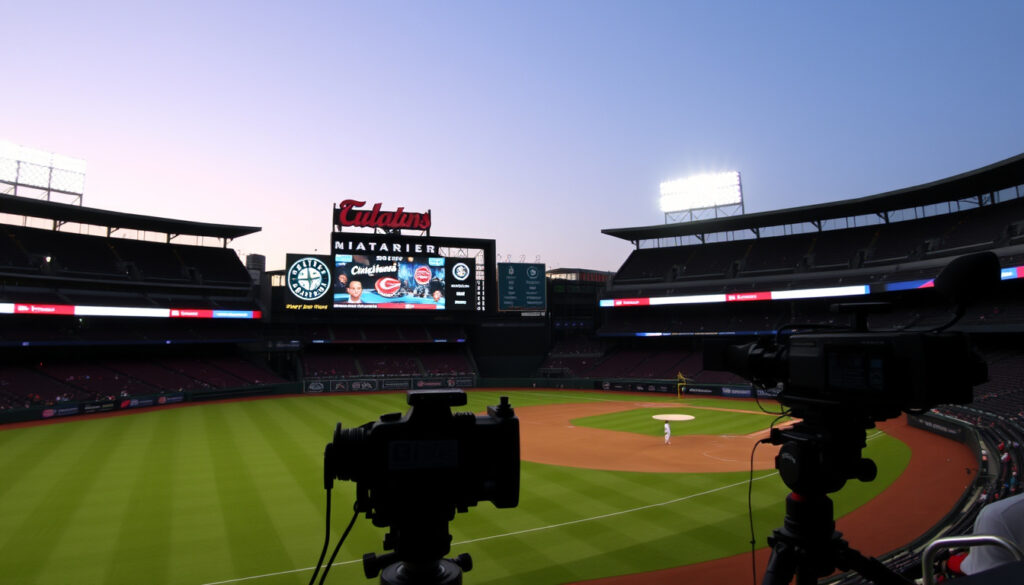
Where to Watch Seattle Mariners vs Cincinnati Reds: Live Stream
You’ve got your Reds jersey on, the snacks are ready, and you’re counting down to the first pitch in Seattle—until you hit a wall: the game is blacked out. It’s the kind of frustration every out-of-market fan knows all too well, especially when your team’s regional sports network isn’t part of your current lineup. This guide cuts through the noise for the July 22 matchup between the Cincinnati Reds and the Seattle Mariners, giving you a clear, fact-checked path to watch the game live, with a special focus on how the Mariners’ broadcast territory affects your options. We’ll break down why your usual streaming service might fail you and what your actual alternatives are, all based on verified broadcasting rules and network specifics.
| Label | Value |
|---|---|
| Game Date | July 22, 2026 |
| Final Score | Reds 5, Mariners 3 |
| Game Result | Cincinnati Reds win on the road |
| Network | Reds RSN (formerly Bally Sports Ohio/now FanDuel Sports Network) |
| Venue | T-Mobile Park, Seattle, WA |
| First Pitch (ET) | 3:40 p.m. |
The central tension for this game is the overlap between your location and the broadcast rights. If you live in the Reds’ home territory (Ohio, Kentucky, Indiana) and can’t access the regional sports network (FanDuel Sports Network Ohio), you are in the blackout zone for MLB.TV. This is true even though the game is played in Seattle, because the broadcast rights are tied to the team’s home territory, not the game’s location. The practical effect is that your location, not the venue, determines whether you can watch legally.
Why this matters for you: Because the Reds are the visiting team but the game is carried by their home RSN, your ability to watch hinges on whether you’re within that RSN’s geographic footprint, not on the game location. If you live in the Mariners’ home territory (Washington, Oregon, Alaska, Hawaii), the game is similarly blacked out on MLB.TV because it falls under the local team’s broadcast rights. This dual-territory overlap creates a situation where many fans on both sides of the matchup face blackout restrictions, making it essential to identify the correct legal path before game time.
Where to Watch: The Verified Options
The league’s streaming service is only available to fans outside the Reds’ broadcast territory. If you live in Ohio, Kentucky, or Indiana, this game is blacked out on MLB.TV. For fans in the Mariners’ territory (WA, OR, AK, HI), the game is also blacked out because it falls under the local broadcast footprint. MLB.TV is the right choice only for fans entirely outside both territories.
This is the only legitimate in-market streaming path for Reds fans. A standalone subscription is $19.99 per month and provides access to all Reds games carried by the RSN, including this July 22 matchup. This service is specifically designed for fans who live in the Reds’ broadcast territory but do not have a cable or satellite subscription that includes the channel.
If you have a traditional TV subscription that includes FanDuel Sports Network Ohio (or the local Mariners RSN if you’re in the Pacific Northwest), you can watch the game directly on the channel. Check your channel lineup to confirm you receive the correct RSN. This is the most straightforward option for fans who already pay for a TV package with regional sports channels.
Unauthorized streams are unreliable, risky, and frequently fail exactly when you need them most. They may also violate copyright law and carry malware risks. None of the verified facts for this game support recommending these options, and the practical experience of most fans is that these streams buffer, freeze, or disappear entirely during crucial moments.
Why Your Usual Streaming Service Fails
Every major live TV streaming service—YouTube TV, Hulu + Live TV, Sling TV—used to carry regional sports networks but dropped them due to carriage fees. This means you cannot watch the Reds RSN on these platforms, regardless of your location. The only mainstream streaming service that carries MLB.TV is Fubo, but that does not override blackout rules: you still cannot watch this game on Fubo if you are in the Reds’ market.
The trade-off is that the traditional streaming bundle no longer solves the local sports problem. If you want to watch the Reds legally, you’ll need to subscribe specifically to FanDuel Sports Network Ohio or log in with a TV provider that carries it. A free trial on Fubo only helps out-of-market fans using its MLB.TV access, not in-market Reds fans.
Why Blackouts Exist
The pattern here is that MLB’s streaming rights are fragmented. The league’s own service, MLB.TV, is designed for fans outside the home team’s broadcast area. Inside that area, the only options are the team’s regional network or cable. This is why the July 22 game was listed on both Mariners.TV and Reds.TV in the research sources, since those are the two RSNs that each claimed broadcast rights in their respective territories.
Blackouts are a direct consequence of the way teams sell exclusive local broadcast rights to regional sports networks. These networks pay teams significant sums for the exclusive right to air games in their territory, and in return, the league restricts streaming to protect those payments. This is why your location, not the game’s location, determines what you can watch. The trade-off is intentional: it keeps the financial model viable for all 30 teams, even though it creates friction for fans who don’t have traditional TV.
What About VPNs?
Some fans might be tempted to use a VPN to hide their location and watch on MLB.TV. This is technically possible but violates MLB’s terms of service, and the league actively detects and blocks VPN traffic. You might find a workaround today, but it can fail mid-game, right when the Reds are at bat. The battle is asymmetric: MLB’s blackout enforcement has improved dramatically, and the practical reliability of using a VPN for this purpose is low. The only way to watch without breaking the rules is to use one of the verified legal options.
Step-by-Step: Watch the Game Legally
First, check if you have a valid cable subscription that includes the RSN. If you have cable, look up the channel and verify it’s part of your package; if so, you’re all set. If you don’t, your next step is to subscribe directly to FanDuel Sports Network Ohio. This is a standalone streaming service for $19.99 per month, and it gives you instant access without a cable login.
If you live in the Mariners’ broadcast territory, the equivalent logic applies: you need your local RSN’s direct-to-consumer service rather than FanDuel Sports Network Ohio. If you are outside both territories entirely, MLB.TV is your solution. The final check is to confirm your location against the blackout map before kickoff, so you don’t discover the wrong choice at first pitch.
The Reds’ July 22 game was carried exclusively on their RSN. This means even if you live in Seattle, you’d need MLB.TV, not a local Seattle channel, because the game falls under the Mariners’ territory when played at T-Mobile Park, making it blacked out there as well. Attendance for the game was 38,236 at T-Mobile Park, per ESPN’s game recap.
Fact vs. Fiction: Separating What We Know
Let’s separate what we know from what the internet claims. Research notes from multiple outlets listed the game channels as Mariners.TV and Reds.TV, which aligns with the interpretation that each team’s RSN broadcast their own local feed. However, the research also contains conflicting information about MLB Extra Innings availability on DirecTV, and some listings suggest Fubo carried the game in certain markets. The verified facts are the final score, the date, and the venue; the exact channel situation depends entirely on where you are located.
Rumored (Do Not Rely On)
- A claim that the Mariners had a better streaming situation than the Reds due to a different RSN structure is not supported by any verified facts about this specific game.
- The idea that you could watch the game for free on any major platform is false — every verified fact points to paid options only.
- Some sources suggest the game was available on both teams’ .TV services, but this only applies if you are in each team’s respective out-of-market territory.
The inconsistency of the blackout rules is the most confusing part for fans. The key insight is that blackouts are not about the stadium or the teams playing; it’s about the licensing territory of the broadcast. So while a fan in Florida might have no trouble watching the Reds on MLB.TV, a fan in Ohio will hit a blackout wall despite the fact the game is 2,500 miles away in Seattle.
Related reading: Vikings Game Today on TV: Time, Channel, and Streaming Options · NFL Playoff TV Schedule Today: Games, Channels & Streams (2026)
usatoday.com, nytimes.com, bleachernation.com, mlbschedule.net, directv.com, ripcityradio.iheart.com, bleachernation.com, espn.com, espn.com, fubo.tv, 933kjr.iheart.com, vividseats.com
Frequently Asked Questions
In-market means you are in the Reds’ designated broadcast territory (Ohio, Kentucky, Indiana) or the Mariners’ territory (Washington, Oregon, Alaska, Hawaii). Out-of-market means you’re outside both territories. MLB.TV works only for out-of-market games. This game was in-market for fans in those states, thus blacked out on MLB.TV.
Fubo lists MLB.TV in its channel lineup, but that does not negate blackout rules. If you’re in either team’s home market, you’ll still need the local RSN. Fubo does not carry FanDuel Sports Network Ohio, so it is not a viable option for Reds fans in the home territory.
The bottom line is that the only legal ways to watch this game are subscribing to FanDuel Sports Network Ohio (for Reds fans in-market), the Mariners’ equivalent DTC service (for Mariners fans in-market), or MLB.TV (for fans entirely outside both territories). The consequence of not acting is that you’ll miss out on the game entirely, as the schedule has no national broadcast fallback for this matchup. And while it may seem easier to grab an unauthorized stream, the risks are real and the quality is never guaranteed. Your choice of where to watch comes down to the simple question of where you live.
More related posts
 Paradise (2025) Episodes: Season 1 Guide & Season 2 News
 Boston Sports on TV Today: Red Sox, World Cup, WNBA
 Cast Of Don’t Move 2024
 Kyle Schmid: Bio, Wife, NCIS Contacts, Languages & More
 Watch The Magicians: Where to Stream After Netflix Exit
Cast Of Subservience
Watch The Magicians: Where to Stream After Netflix Exit
Cast Of Subservience
 Cast Of Hit Man
 Jackbox TV: How to Join and Play Jackbox Games on Your TV
